Essential Special Education Resources for Teachers (2024 Guide)
The essential special education resources every SPED teacher needs — from IEP data collection to social stories, executive functioning, and life skills curriculum.
Special education teachers juggle more responsibilities than almost any other educator. Between writing IEPs, collecting data, managing behaviors, differentiating instruction, communicating with parents, and attending meetings, finding the right resources can make the difference between surviving and thriving. This guide covers the essential special education resources every SPED teacher needs, organized by category.
IEP Data Collection Resources
Data collection is the backbone of special education. Without it, you can't track progress, make data-driven decisions, or defend your instructional choices in IEP meetings. The key is having systems that are sustainable — you can't collect data on every goal every day.
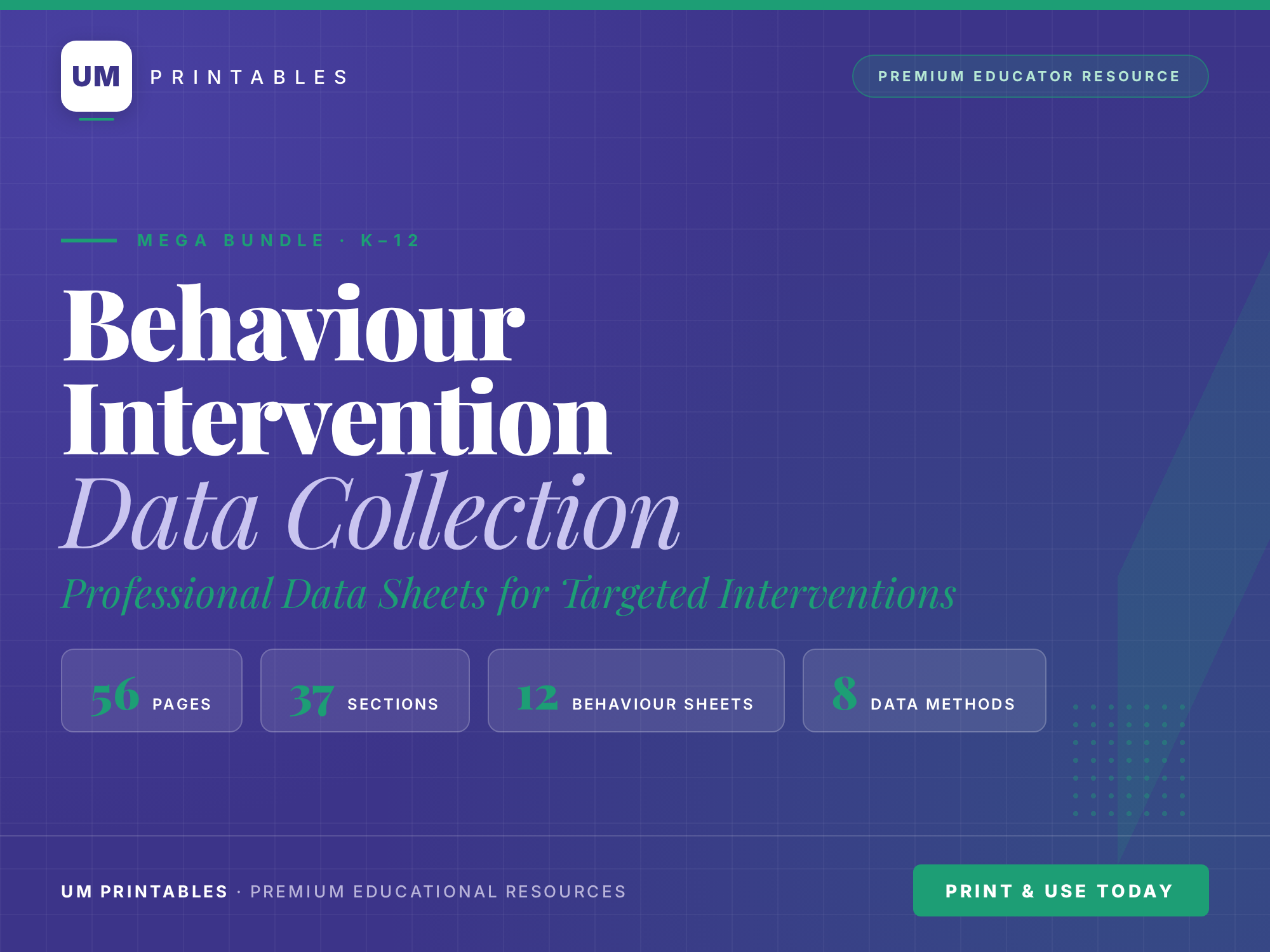
Our Behaviour Intervention Data Collection Bundle includes frequency and duration recording sheets for the 10 most common classroom behaviors, ABC observation forms, a weekly behavior graph template, and an intervention planning template. Each sheet includes an 'operational definition' box to ensure consistency among staff.
Get the IEP data collection bundle →
Social Stories for Autism
Social stories are one of the most effective tools for supporting students with autism. They describe social situations, explain what to expect, and suggest appropriate responses. Our Social Stories Bundle includes 30 social skills stories covering common classroom and home situations.
Get the social stories bundle →
Executive Functioning Support
Many students in special education struggle with executive functioning — the mental processes that help us plan, focus, remember instructions, and manage tasks. Our Executive Functioning Workbook is a 6-week intervention program that targets working memory, planning, organization, time management, and self-monitoring.
Get the executive functioning workbook →
ADHD Classroom Tools
Students with ADHD need specific supports: visual schedules, task breakdown cards, movement breaks, and clear expectations. Our ADHD Classroom Toolkit includes all of these plus behavior tracking sheets and parent communication forms.
Get the ADHD classroom toolkit →
Life Skills Curriculum
For students in transition programs, life skills curriculum is essential. Our Daily Living Skills Curriculum covers personal hygiene, meal preparation, household management, and community navigation for grades 6-12.
Get the life skills curriculum →
Self-Advocacy and Self-Determination
Teaching students to advocate for themselves is one of the most important things a special education teacher can do. Our Self-Advocacy and Self-Determination Curriculum helps students understand their disability, articulate their needs, and participate meaningfully in their IEP meetings.
Get the self-advocacy curriculum →
Frequently Asked Questions
What are the most important special education resources?
The most important resources are: IEP data collection tools, behavior intervention materials, social stories (for autism support), executive functioning activities, visual schedules, and life skills curriculum for transition-age students.
How do I collect IEP data efficiently?
Use clipboard data sheets, train paraprofessionals to collect data, schedule dedicated data collection time, use operational definitions for consistency, and review data weekly. Our data collection bundle includes all the forms you need.
What is the best way to support students with ADHD?
Provide visual schedules, break tasks into smaller chunks, offer movement breaks, use preferential seating, give clear concise directions, use timers, and provide immediate feedback. Our ADHD Classroom Toolkit includes all of these tools.
How do social stories help students with autism?
Social stories describe social situations from the student's perspective, explain what to expect, and suggest appropriate responses. They reduce anxiety, teach social expectations, and help students navigate new or challenging situations.